
𝗔𝗜 𝗙𝗢𝗥 𝗘𝗩𝗘𝗥𝗬𝗢𝗡𝗘: 𝗣𝗥𝗔𝗖𝗧𝗜𝗖𝗔𝗟 𝗧𝗢𝗢𝗟𝗦 𝗧𝗛𝗔𝗧 𝗚𝗜𝗩𝗘 𝗠𝗘𝗗𝗜𝗔 𝗦𝗧𝗔𝗥𝗧𝗨𝗣𝗦 𝗔𝗡 𝗨𝗡𝗙𝗔𝗜𝗥 𝗔𝗗𝗩𝗔𝗡𝗧𝗔𝗚𝗘
- Posted on June 03, 2026
- Author: Esther Onuoha
- Articles
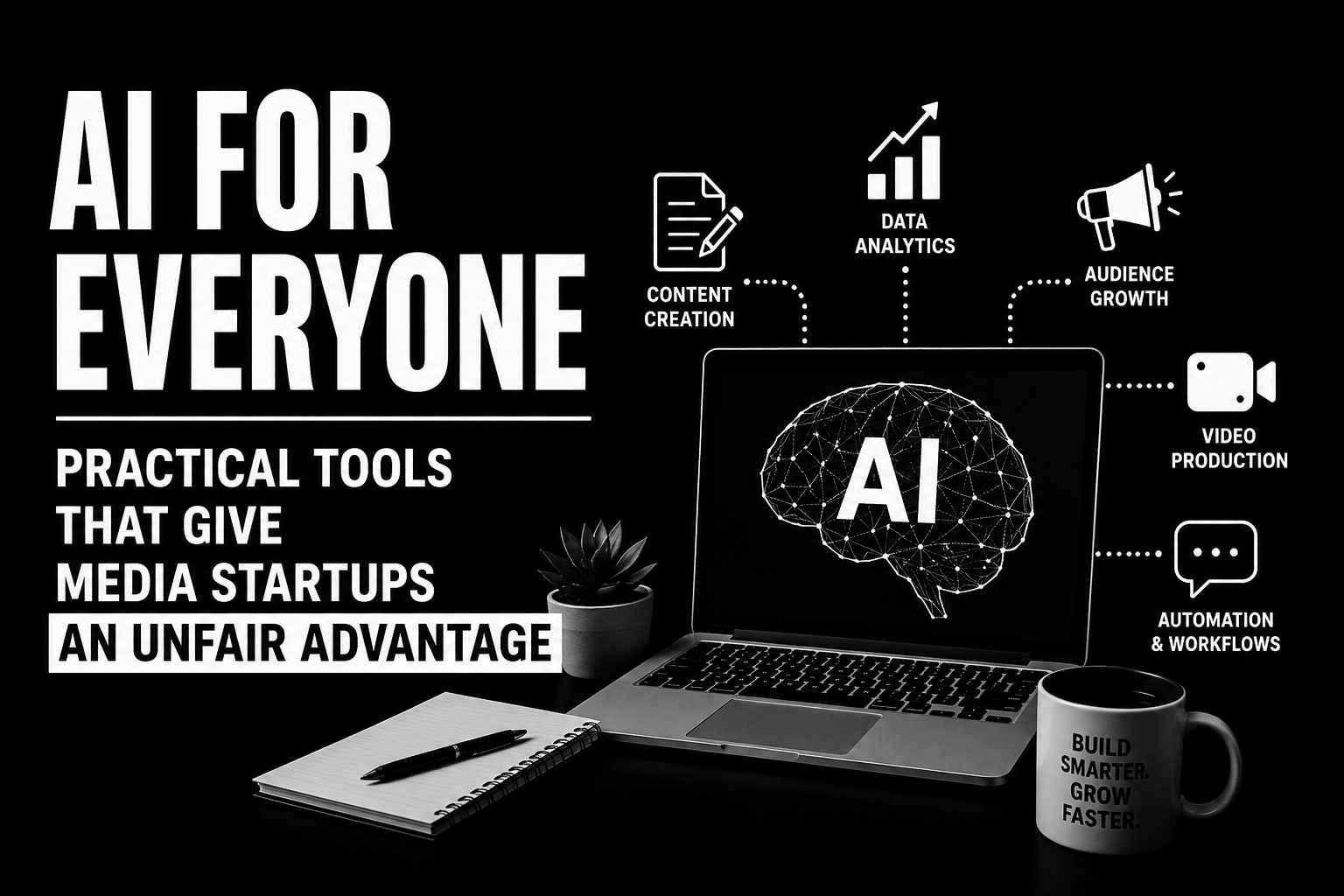
For decades, media success depended on scale large editorial teams, expensive production workflows, and strong distribution networks. That model is no longer the default.
Today, artificial intelligence is quietly reshaping the media industry, lowering barriers and giving small teams capabilities that once required entire newsrooms. For media startups, this shift is not incremental, but structural.
𝗪𝗛𝗬 𝗔𝗜 𝗠𝗔𝗧𝗧𝗘𝗥𝗦 𝗜𝗡 𝗠𝗘𝗗𝗜𝗔 𝗡𝗢𝗪
Media startups typically struggle with four constraints:
√ Limited manpower
√ Tight content production timelines
√ Distribution challenges
√ Monetization pressure, etc
AI directly targets each of these bottlenecks by automating or accelerating core workflows.
Instead of replacing journalists or creators, AI functions as a force multiplier, helping small teams behave like large organizations.
𝗦𝗘𝗘 𝗕𝗘𝗟𝗢𝗪:
1. Content Creation at Scale (Without Losing Speed):
One of the most immediate advantages AI offers is in content production efficiency.
Modern AI tools can help with:
√ Drafting articles from structured prompts
√ Converting raw notes into publishable content
√ Creating multiple headline variations for A/B testing
√ Summarizing long reports into digestible stories, etc
Tools commonly used include:
• Writing assistants (for ideation and drafting)
• Research summarization tools
• AI editing and grammar optimization systems,
The key shift: startups can now produce consistent daily output without scaling headcount proportionally.
2. Smarter Audience Targeting and Personalization:
Traditional media distribution relied on “publish and hope.” But, AI replaces that with data-driven audience intelligence.
Startups can now:
√ Analyze reader behavior patterns
√ Predict content preferences
√ Personalize newsletters and recommendations
√ Optimize posting times for engagement, etc
This is especially powerful for niche media startups trying to dominate specific audiences (tech, finance, lifestyle, or policy content).
3. AI-Powered Analytics for Editorial Decisions:
Instead of guessing what performs well, AI enables real-time editorial intelligence.
Media startups can now track:
√ Which topics generate the most engagement?
√ Where readers drop off in articles?
√ Which formats perform best (listicles, opinion, explainers)?
√ Sentiment around published content,etc
This turns editorial strategy into a continuous feedback loop, not a monthly review process.
4. Multimedia Production Without Big Budgets:
AI is also collapsing the cost of production for:
√ Graphics
√ Video editing
√ Voiceovers
√ Social media clips
A single content piece can now be transformed into:
• A blog article
• A LinkedIn carousel
• A short-form video script
• An infographic, etc
For media startups, this means one idea becomes multiple distribution assets automatically.
5. Research and Fact-Gathering Acceleration:
Journalism and content creation rely heavily on research, but AI dramatically speeds this up.
Startups can use AI to:
√ Summarize long reports instantly
√ Extract key insights from PDFs
√ Compare multiple sources quickly
√ Build background context for stories, etc
This reduces research time from hours to minutes, allowing more focus on storytelling and analysis.
6. Workflow Automation: AI helps in automation by:
√ Automated scheduling of posts
√ Email newsletter generation
√ Content repurposing pipelines
√ Editorial workflow management, etc
This is where small media startups gain a structural advantage over traditional media houses with slower systems.
𝗧𝗛𝗘 𝗥𝗘𝗔𝗟 𝗖𝗢𝗠𝗣𝗘𝗧𝗜𝗧𝗜𝗩𝗘 𝗘𝗗𝗚𝗘: 𝗦𝗣𝗘𝗘𝗗 + 𝗖𝗢𝗡𝗦𝗜𝗦𝗧𝗘𝗡𝗖𝗬
AI does not just make media startups better, it changes the rules of competition.
The winners in this space are no longer the biggest teams.
They are:
• The fastest publishers
• The most consistent creators
• The most data-informed editors, etc
In other words, agility becomes the new scale.
𝗡𝗢𝗪! 𝗧𝗛𝗘 𝗜𝗠𝗣𝗢𝗥𝗧𝗔𝗡𝗧 𝗥𝗘𝗔𝗟𝗜𝗧𝗬 𝗖𝗛𝗘𝗖𝗞
AI is powerful, but not a replacement for:
√ Editorial judgment
√ Ethical reporting
√ Original storytelling
√ Human context and interpretation, etc
The strongest media startups will be those that combine: Human editorial intelligence + AI operational efficiency.
𝗖𝗢𝗡𝗖𝗟𝗨𝗦𝗜𝗢𝗡
AI is no longer a "future advantage" for media startups, it is a present necessity.
From writing and analytics to distribution and multimedia production, AI tools are quietly compressing what used to be large newsroom pipelines into lean, high-output systems.
For startups willing to adapt, the advantage is clear: You don’t need to be big to compete anymore. You just need to be fast, smart, and system-driven.